
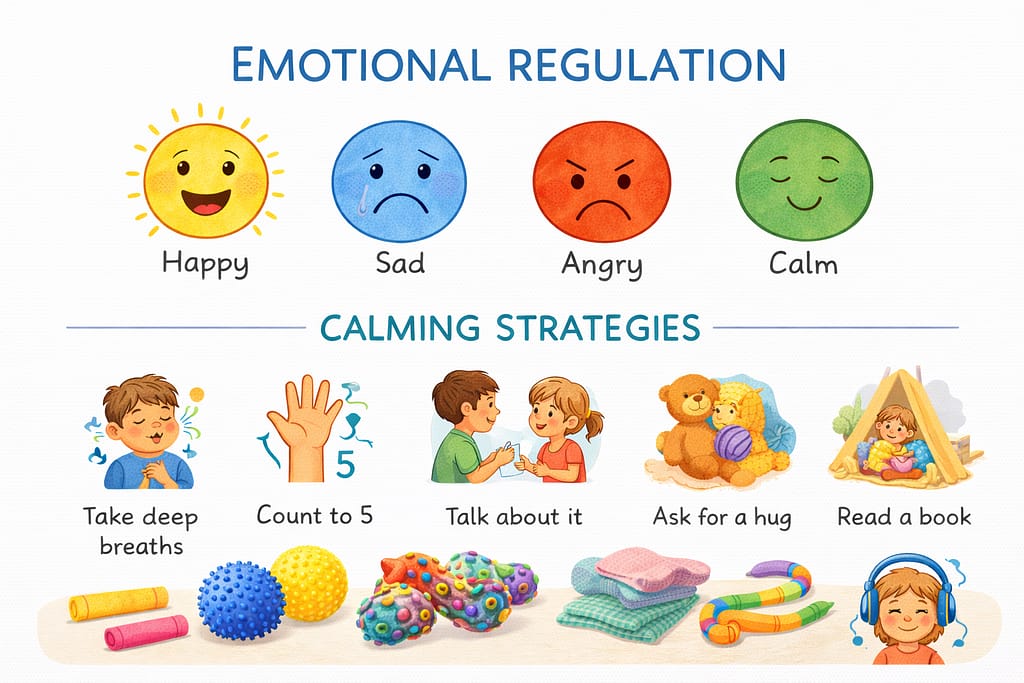
Calming activities for kids are simple techniques that help children regulate strong emotions such as frustration, anger, or overstimulation. These activities teach children to recognize feelings, calm their bodies, and respond thoughtfully rather than impulsively.
Calming Activities for Kids: Why these activities are so important.
A three-year-old throws a toy across the room.
A five-year-old cries because their banana broke in half.
To adults, these reactions seem dramatic.
But for young children, these are real emotional overload moments..
Between ages 3 and 6, children experience powerful emotions like:
- frustration
- excitement
- jealousy
- disappointment
- overstimulation
The challenge is that their brains are still learning how to handle those feelings.
That’s why calming activities for kids are so important.
These simple activities help children:
- recognize emotions
- calm their bodies
- respond instead of reacting
And when children learn these skills early, they develop emotional resilience that benefits them for life.
Quick Calm-Down Activities for Kids (Ages 3–6)
If your child is overwhelmed or heading toward a meltdown, simple calming activities can help them reset and regain control of their emotions.
Try one of these calming activities for kids:
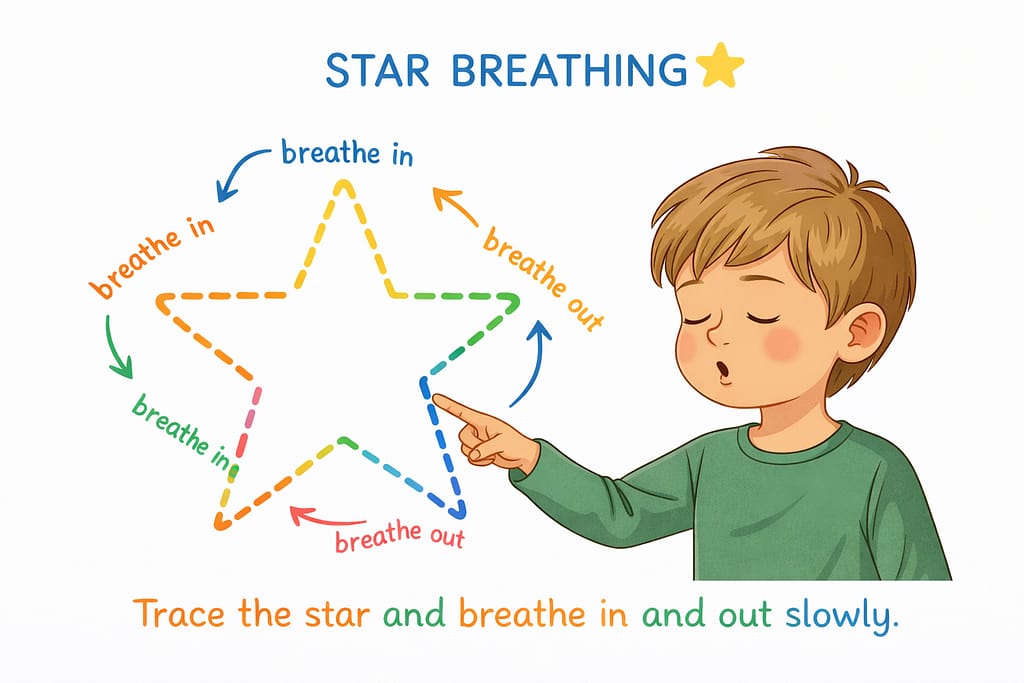
• Deep breathing star exercise
• Emotion coloring pages
• Hugging a stuffed animal or squeezing a pillow
• Sitting in a calm-down corner
• Drawing what a feeling looks like
• Listening to a slow storytelling activity
These simple calming activities for kids help reset the nervous system and guide children toward healthier emotional responses.
Why Calming Activities Help Children Regulate Emotions
Young children experience emotions more intensely because the parts of the brain responsible for self-control are still developing. When a child feels overwhelmed, their body often shifts into a stress response, making it difficult to think clearly or follow instructions.
Calming activities for kids help slow the body and nervous system, allowing the brain to regain balance. Simple actions like deep breathing, drawing, or quiet storytelling give children time to process emotions and regain control.
What Emotional Regulation Means for Young Kids
Emotional regulation isn’t about stopping feelings.
It’s about managing them.
For children ages 3–6, emotional regulation includes four core skills:
• noticing feelings
• naming emotions
• calming the body
• choosing a response
Many calming activities for kids are designed to support these four skills in simple and playful ways.
But here’s the key insight many parents miss:
Young children cannot do this alone.
Their brains rely on co-regulation, where adults guide them through emotional experiences until they develop internal control.
Think of emotional regulation like training wheels on a bicycle.
Children borrow balance from you until they can ride on their own.
Signs Your Child Needs a Calming Activity
Young children rarely say, “I feel overwhelmed.”
Instead, emotions show up through behavior.
Watch for these early warning signs:
• whining or irritability
• throwing toys
• sudden crying
• refusing simple instructions
• restlessness or pacing
• difficulty focusing
Recognizing these early signals allows parents to introduce calming activities before a meltdown happens.
Why Too Much Screen Time Can Increase Overstimulation
Screens themselves are not always harmful.
But fast-paced digital content can overstimulate a child’s brain.
Rapid scene changes, bright visuals, and instant rewards trigger dopamine responses that can make emotional regulation harder.
Over time, this may lead to:
• lower patience
• increased impulsivity
• difficulty transitioning between activities
• reduced tolerance for boredom
Balancing screen time with calming activities for kids helps restore emotional balance and supports healthy development.
Calming Activities for Kids: The CALM Framework for Emotional Regulation
One helpful strategy parents can use is the CALM Framework. This simple approach makes calming activities for kids far more effective.
C — Connect Before Correct
Children cannot learn when they feel unsafe or overwhelmed.
Connection calms the nervous system.
Instead of saying:
“Stop crying.”
Try:
“I see you’re upset. I’m here.”
Feeling understood helps the nervous system settle.
A — Anchor the Body
The body must calm before the brain can think clearly.
Use sensory activities like:
• deep breathing
• stretching
• squeezing a pillow
• slow movement
These activities regulate the nervous system and reduce emotional intensity.
L — Label the Emotion
When children learn words for emotions, they gain control over them.
Examples:
“You seem frustrated.”
“You look disappointed.”
Research shows that labeling emotions activates the brain’s prefrontal cortex, helping reduce emotional overwhelm.
M — Model the Response
Children learn emotional regulation by watching adults.
If adults react calmly, children eventually mirror that behavior.
Your calm becomes their blueprint.
This is why the most effective calming activities for kids begin with calm adult guidance.
Experts note that self-regulation is a teachable skill that children develop through practice, guidance, and structured calming strategies-Child Mind Institute
Six Calming Activities for Kids That Actually Work
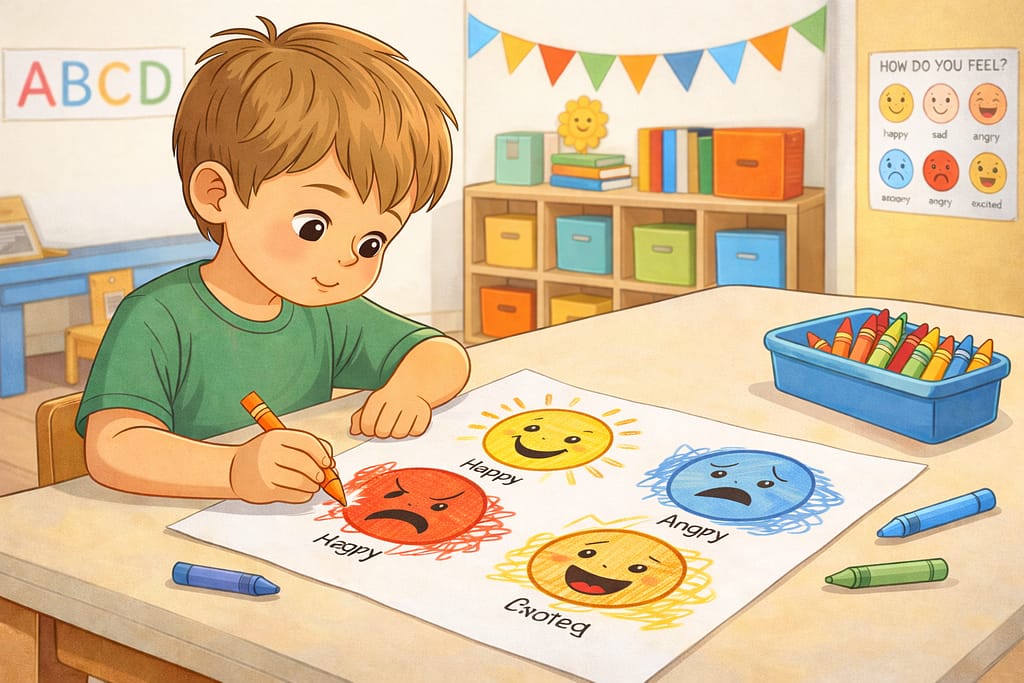
1. Emotion Coloring Pages
Coloring provides slow, repetitive movement that relaxes the nervous system. This is one of the easiest calming activities for kids to introduce at home.
Use coloring pages showing emotions such as:
• happy
• angry
• sad
• excited
While coloring, ask:
“What does anger feel like in your body?”
This builds emotional awareness.
2. Deep Breathing Star
Draw a star on paper.
Have your child trace the points while breathing slowly.
• inhale while moving up
• exhale while moving down
Turning breathing into a visual game makes it easier for children to participate.
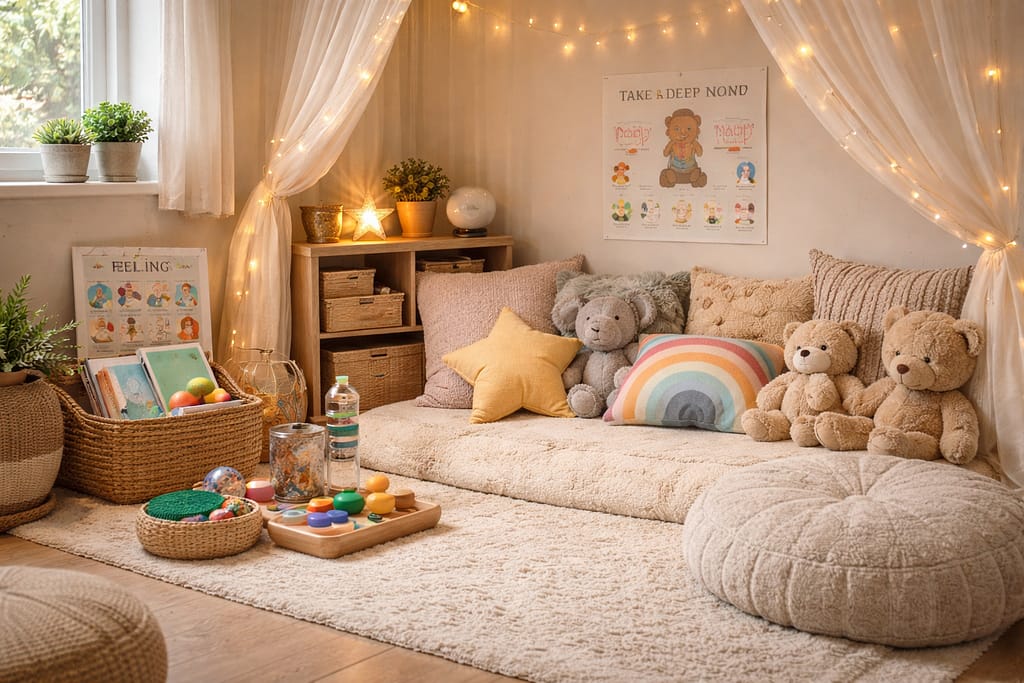
3. Calm-Down Corner
Create a cozy space with:
• pillows
• stuffed animals
• sensory toys
• soft lighting
This space should never feel like punishment.
Instead, it acts as a safe emotional reset zone.
4. Draw “How I Feel” Pictures
Young children often express emotions through art before they can use words.
Ask them to draw:
“What your feelings look like.”
Anger might be red scribbles.
Sadness might be blue rain.
Creative expression activities like this are powerful calming activities for kids because they help externalize emotions.
(Try our emotion coloring pages- Affu’s Feelings Colouring Pack)
5. Simple Matching Games
Memory matching games build attention and patience.
They also train the brain to pause and think before reacting.
Even five minutes of this activity can support emotional control and serve as an effective calming activity for kids.
6. Slow Storytelling Time
Storytelling slows the mind and encourages emotional reflection.
Example:
“A bunny felt angry when his tower fell down.”
Then ask:
“What could the bunny do to calm down?”
Children often relate deeply to stories.
Sensory Tools That Help Kids Calm Down
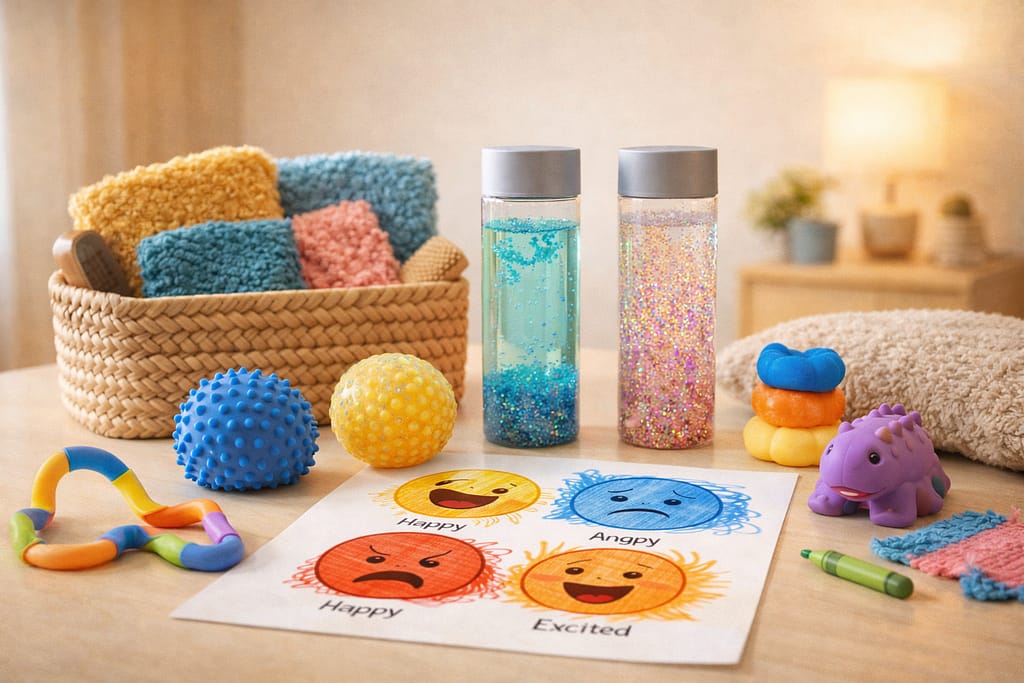
Some children respond strongly to sensory input.
Helpful tools include:
• stress balls
• sensory bottles with glitter or water
• weighted lap pads
• soft textured fabrics
• fidget toys
These tools provide gentle physical input that helps regulate the nervous system.
Common Mistakes Parents Make
Expecting Instant Calm
Emotional regulation develops slowly.
Even effective calming activities require practice.
Shaming Emotions
Saying “stop crying” teaches children that emotions are wrong.
Instead, acknowledge feelings and guide them gently.
Ignoring Early Signs of Stress
Meltdowns often follow small signals, such as whining or irritability.
Responding early prevents emotional escalation.
Using the Calm Corner as Punishment
If the calm space feels like discipline, children will resist using it.
The calm corner should always feel safe. If used as punishment, children may resist the very calming activities for kids designed to help them.
What Research Says About Emotional Regulation
Child development research shows that emotional regulation skills begin to form during early childhood.
Children who develop these skills early often demonstrate:
• stronger social relationships
• better classroom focus
• improved problem-solving abilities
Practicing calming activities regularly helps children build these important skills over time.
Research from the Harvard Center on the Developing Child shows that emotional regulation skills begin forming in early childhood and are strengthened through supportive relationships and guided experiences.
A Simple 7-Day Emotional Regulation Routine
Parents can introduce calming activities gradually.
Day 1: Create a calm-down corner
Day 2: Practice the breathing star exercise
Day 3: Read a story about emotions
Day 4: Use emotion coloring pages
Day 5: Practice naming emotions during play
Day 6: Draw feelings together
Day 7: Reflect on emotions from the week
Within a week, many children begin recognizing their feelings faster.
Final Thoughts
Calming activities for kids are not just tools for stopping tantrums.
They are the foundation of lifelong emotional intelligence.
When children learn to notice feelings, calm their bodies, and respond thoughtfully, they gain skills that shape every relationship and challenge they will face.
And the most powerful part?
These lessons don’t require complicated systems.
They begin with small moments of calm, connection, and understanding.
Your presence, patience, and guidance become the emotional compass your child carries for life.
What are calming activities for kids?
Calming activities are simple exercises that help children manage strong emotions such as frustration, anger, or overstimulation.
At what age can children learn to regulate their emotions?
Children begin learning emotional regulation around age two, but the most significant development occurs between ages three and six.
Can calming activities prevent tantrums?
They cannot eliminate every tantrum, but they help children recognize emotions earlier and respond more calmly.
How long does it take for a child to calm down?
Most young children need several minutes to regulate emotions. Regular practice shortens recovery time over months.
Leave a Reply